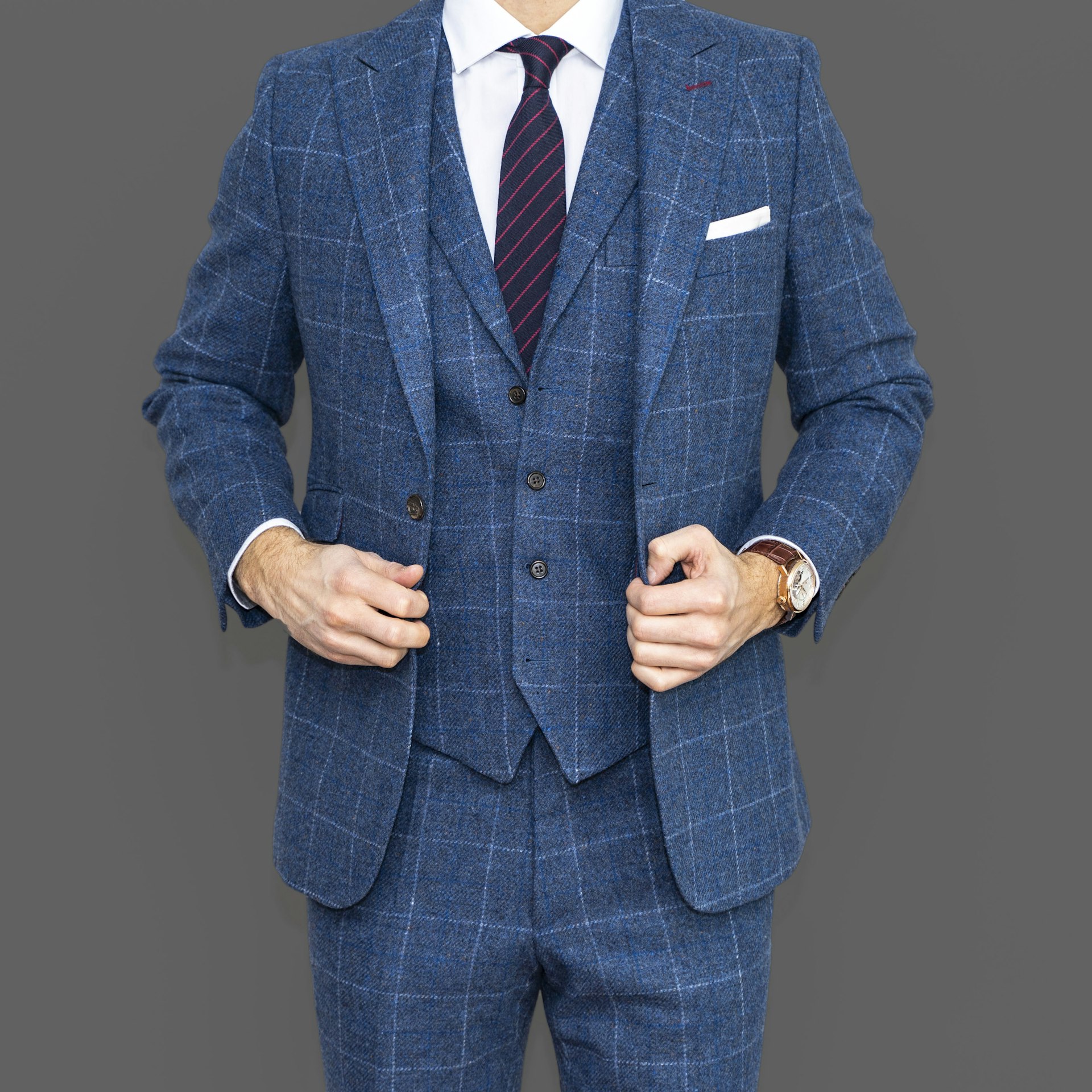
Paul Stuart Review: Made-to-Measure Is the Reason to Come Here, Not the Sale Rack
Paul Stuart sells luxury American menswear with made-to-measure, made-to-order shoes and formal services. The tailoring service is the reason to shop there; the construction details decide whether the price is justified.
By Med Consumer Watch Team
Paul Stuart is a long-established American luxury menswear house — tailored clothing (blazers, suits, tuxedos, dress shirts, dress pants, overcoats), sportswear, a cashmere shop, footwear, accessories, and services including Made to Measure, Made to Order Shoes and a Weddings & Events offering, with physical stores.
Verified pricing from the pages we saw: a silk and cotton cardigan at $1,195 full price, discounted to $899.75 and then $629.82; a cotton cable knit cardigan at $650, then $599.75 and $419.82. An end-of-season sale with an extra 30% off sale was running.
The layered discounting tells you something useful about the category.A $1,195 knit reaching $629.82 is roughly 47% off, and end-of-season menswear at this level routinely does. Buying luxury menswear at full price in-season is a choice, not a necessity, and the sale rack is where most people should start.
But the actual reason to shop a house like this is the service, not the discount — and made-to-measure is the thing that justifies the premium if anything does.This review contains affiliate links and we may earn a commission if you buy through them. The assessment is our own. Prices verified August 12, 2026 and subject to change; the returns page was not resolvable and should be confirmed.
Made to measure, bespoke, and off the rack
These three terms are used loosely and they mean genuinely different things. Knowing which you are buying is the difference between value and a very expensive mistake.
Off the rack (ready to wear). A finished garment in standard sizes. You then alter it — and how far it can be altered is limited. The shoulder is the constraint: it is structurally the hardest and most expensive part to change, which is why the standard advice is to buy for the shoulders and alter everything else.Made to measure.An existing base pattern adjusted to your measurements — sleeve and body length, waist suppression, chest, trouser rise, and a choice of fabric, lining, buttons and details. It is not a pattern drafted from scratch.For most people this is the sweet spot: substantially better fit than off the rack, substantially cheaper and faster than bespoke, and it handles the common asymmetries — one shoulder lower, a longer arm — that off-the-rack cannot.
Bespoke.A pattern drafted for you from nothing, cut by hand, with multiple fittings during construction. Weeks of work, many times the price, and the only route to a genuinely perfect fit for an unusual build.
Where made to measure earns its money:Anyone off standard proportions — tall, short, athletic build with a drop between chest and waist, a longer or shorter torso.
Anyone who wears tailoring regularly and will amortise the cost.
Weddings, where fit is photographed from every angle for the rest of your life.
Anyone who has never had a suit that actually fits and does not know what that feels like.
Where it does not:A first suit for occasional wear.A good off-the-rack suit properly altered beats a poorly specified made-to-measure one, and costs far less.
If you cannot articulate what you want. Made to measure gives you choices; choices you make badly are permanent.What to ask before commissioning:How many fittings, and is a remake included if the first attempt is wrong?
What is the lead time? Commonly six to twelve weeks.
Is the garment canvassed or fused? See below — this is the question most customers never ask and it determines how the garment ages.Can the pattern be kept for future orders? A stored pattern makes the second suit far easier, and is a real reason to return to the same house.
| Off the rack | Made to measure | Bespoke
Pattern | Standard sizes | Base pattern adjusted to you | Drafted from scratch
Fittings | None; alterations after | Usually one to two | Multiple during construction
Lead time | Immediate | Commonly 6-12 weeks | Months
Cost | Lowest | Middle | Highest by far
Best for | Occasional wear, standard build | Regular wear, off-standard proportions, weddings | Unusual builds, connoisseurs
Key limit | The shoulder cannot really be altered | Choices are permanent | Cost and time
Buy off-the-rack tailoring for the shoulders and alter everything else. The shoulder is the one part a tailor cannot meaningfully change without rebuilding the jacket, while sleeves, waist, length and trousers are all routine adjustments.
Canvassed versus fused - the detail that decides longevity
This is the single most useful technical thing to know about buying a jacket, and it is almost never on a product page.
Inside every tailored jacket is an interlining between the outer fabric and the lining, giving the chest and lapels their shape. How it is attached is what separates a jacket that improves with wear from one that fails.Fused.The interlining is glued to the outer fabric. Cheap, fast, and consistent. The failure mode is delamination — bubbling and rippling across the chest and lapels, typically after repeated dry cleaning or over years. It cannot be repaired, and the jacket is finished. Most suits below a certain price are fused, and many well above it are too.Half canvassed.A floating horsehair canvas through the chest and lapels, stitched rather than glued, with fusing lower down. A reasonable compromise and common at mid-to-upper prices.Full canvassed.Canvas through the entire front, attached by stitching.It moves with the fabric, moulds to your body over time, and does not delaminate.This is what "a suit that gets better with wear" actually refers to — it is not a metaphor.
How to check without asking:the pinch test.Take the front of the jacket between thumb and finger just below the buttonhole, away from the lapel edge, and rub gently.If you can feel a distinct third layer floating between outer fabric and lining, it is canvassed. If the two layers move as one, it is fused.Other construction points worth knowing:Fabric weight and weave matter more than the "Super" number.Super 100s, 120s, 150s describe yarn fineness, not quality — higher numbers are finer, softer, more luxurious and more fragile.Super 150s drapes beautifully and wears out faster.For a suit you will wear weekly, Super 110s to 130s in a mid-weight cloth is more sensible than the highest number available.Working buttonholes on the cuff are a marker of better construction — and note they make sleeve length alterations harder.Pattern matching across seams, pockets and the back is a genuine indicator of care.
Half lining or quarter lining is a warm-weather feature, not a cost saving, when done deliberately.
And on care, which determines lifespan more than construction:Dry clean as little as possible — twice a year for a regularly worn suit is plenty. Dry cleaning is harsh on fabric and is what delaminates fused jackets.Brush after wearing, air it, and use a wide wooden hanger that supports the shoulders.
Rest a suit at least a day between wears so the fibres recover.
Rotate.Two suits worn alternately last more than twice as long as one worn daily.
Pinch the front of a jacket just below the buttonhole and rub gently. If you can feel a distinct third layer floating between the outer fabric and the lining, it is canvassed and will mould to you over time. If the two layers move as one, it is fused and can eventually bubble.
What to buy, and what the sale rack is for
Given the discounting pattern here, a strategy is worth having.Buy classics on sale; buy fit-critical items at full service.End-of-season sale is the right place for knitwear, shirts, accessories, outerwear and anything where fit tolerance is generous.A $1,195 cardigan at $629.82 is the same cardigan.Made to measure and anything fit-critical is not a sale purchase — the value is in the service.
The classics that hold their usefulness:A navy suit before a grey one, before anything else. It is the most versatile garment in menswear and works for interviews, weddings and funerals alike.
A mid-grey suit second.
A navy blazer, which does more work than any other jacket.
White and light blue shirts in a good cotton before anything patterned.
Well-made shoes in black and brown — and this is where cost-per-wear favours quality most.A resoleable Goodyear-welted shoe can last decades with maintenance; a cemented shoe cannot be resoled at all.Ask which construction before buying.On cost per wear, honestly.A $1,500 suit worn weekly for ten years is roughly $3 per wear. A $400 suit that looks tired after two years is $4.The arithmetic genuinely favours quality — for garments you actually wear often.It does not favour buying an expensive tuxedo you will wear twice, which is what rental exists for.
Practical notes:Budget for alterations on everything.Even a made-to-measure garment has a final fitting, and off-the-rack always needs work. $50 to $150 is normal for a suit; treat it as part of the price.Shoe trees, in cedar, from day one.They preserve shape and absorb moisture, and they extend shoe life more than anything else you can buy.Confirm the return policy before ordering online, which we could not verify — and note that altered and made-to-measure garments are almost universally non-returnable, for obvious reasons. That is normal and it is worth knowing before you commission anything.And a note on shopping this category online at all.Knitwear, accessories and shirts travel well.Tailoring does not — the shoulder fit that determines everything cannot be judged from a photograph.For a jacket, go to the store if there is one within reach, and if there is not, order two sizes and accept that alterations follow.
Altered and made-to-measure garments are almost universally non-returnable. Confirm the return policy before ordering, and be certain of fabric, style and specification before commissioning anything - the choices in made-to-measure are permanent.
Frequently asked questions
What does Paul Stuart cost?
Prices on the pages we saw ranged from around $419.82 on end-of-season sale to $1,195 at full price for knitwear, with tailored clothing and made-to-measure priced separately.
What is made to measure?
An existing base pattern adjusted to your measurements, with fabric and detail choices. It is not drafted from scratch like bespoke, and for most people it is the best balance of fit, cost and time.
Should I buy made to measure for a first suit?
Probably not. A good off-the-rack suit properly altered beats a poorly specified made-to-measure one and costs far less.
What is canvassed versus fused?
Canvassed jackets have a floating interlining stitched in, which moulds to you and does not fail. Fused jackets have it glued, which can eventually bubble and cannot be repaired. Pinch the front below the buttonhole — a distinct third layer means canvassed.
Does a higher Super number mean better?
No. Super numbers describe yarn fineness — higher is softer and more fragile. For a regularly worn suit, Super 110s to 130s is more sensible than the highest available.
How often should I dry clean a suit?
As little as possible — twice a year for regular wear. Dry cleaning is harsh and is what delaminates fused jackets.
What should I buy first?
A navy suit, then mid-grey, then a navy blazer. White and light blue shirts before anything patterned.
Is expensive tailoring worth it?
On cost per wear, yes for garments you wear often. Not for a tuxedo you will wear twice — that is what rental is for.
Can I return altered clothing?
Almost universally no. Be certain before commissioning anything.
What is the single best accessory purchase?
Cedar shoe trees. They preserve shape and absorb moisture, and extend shoe life more than anything else.
The Bottom Line
Our rating: 8 / 10. A serious menswear house whose value is in its services, sold alongside a sale rack that is where most people should actually shop.
The discounting pattern is worth understanding rather than being cynical about. A $1,195 cardigan reaching $629.82 — roughly 47% off — is ordinary end-of-season behaviour at this level, and it means buying classics at full price in-season is a choice rather than a necessity.Knitwear, shirts, accessories and outerwear are exactly what a sale rack is for, because fit tolerance is generous and the garment is identical.
What justifies the house rather than the discount is Made to Measure, and it is genuinely the sweet spot for most people: a base pattern adjusted to your measurements, handling the asymmetries — one shoulder lower, a longer arm, a drop between chest and waist — that off-the-rack cannot fix, because the shoulder is the one part a tailor cannot meaningfully alter. For anyone off standard proportions, anyone wearing tailoring weekly, or anyone dressing for a wedding, that is worth real money.
Ask one question before commissioning anything: canvassed or fused.A fused jacket's interlining is glued and can eventually bubble across the chest, and it cannot be repaired.A canvassed one is stitched, moulds to you and does not fail — which is what "gets better with wear" actually means. You can check yourself by pinching the front below the buttonhole.Two corrections to common assumptions.A higher Super number is finer and more fragile, not better — Super 110s to 130s outlasts Super 150s for a suit you actually wear. And dry clean twice a year, not monthly; it is harsh, and it is what delaminates fused jackets.
Budget for alterations on everything, buy cedar shoe trees, and know that altered and made-to-measure garments are not returnable.Browse Paul Stuart's current range and servicesInformational only. Prices verified August 12, 2026 and subject to change; the returns page was not resolvable and terms should be confirmed directly. Altered and made-to-measure garments are generally non-returnable - confirm specification and fit before commissioning.
This article is for informational purposes only and is not intended as medical advice. Always consult with a qualified healthcare provider before making decisions about your health or medications. Individual experiences may vary.
Enter for a chance to use it toward eligible CoreAge Rx products and services.
The gift card may be applied toward eligible CoreAge Rx products and services. Prescription products additionally require completing the intake process and evaluation by a licensed healthcare provider, who alone decides eligibility and treatment. Winning does not guarantee that you will qualify for a GLP-1 medication or any other prescription treatment.