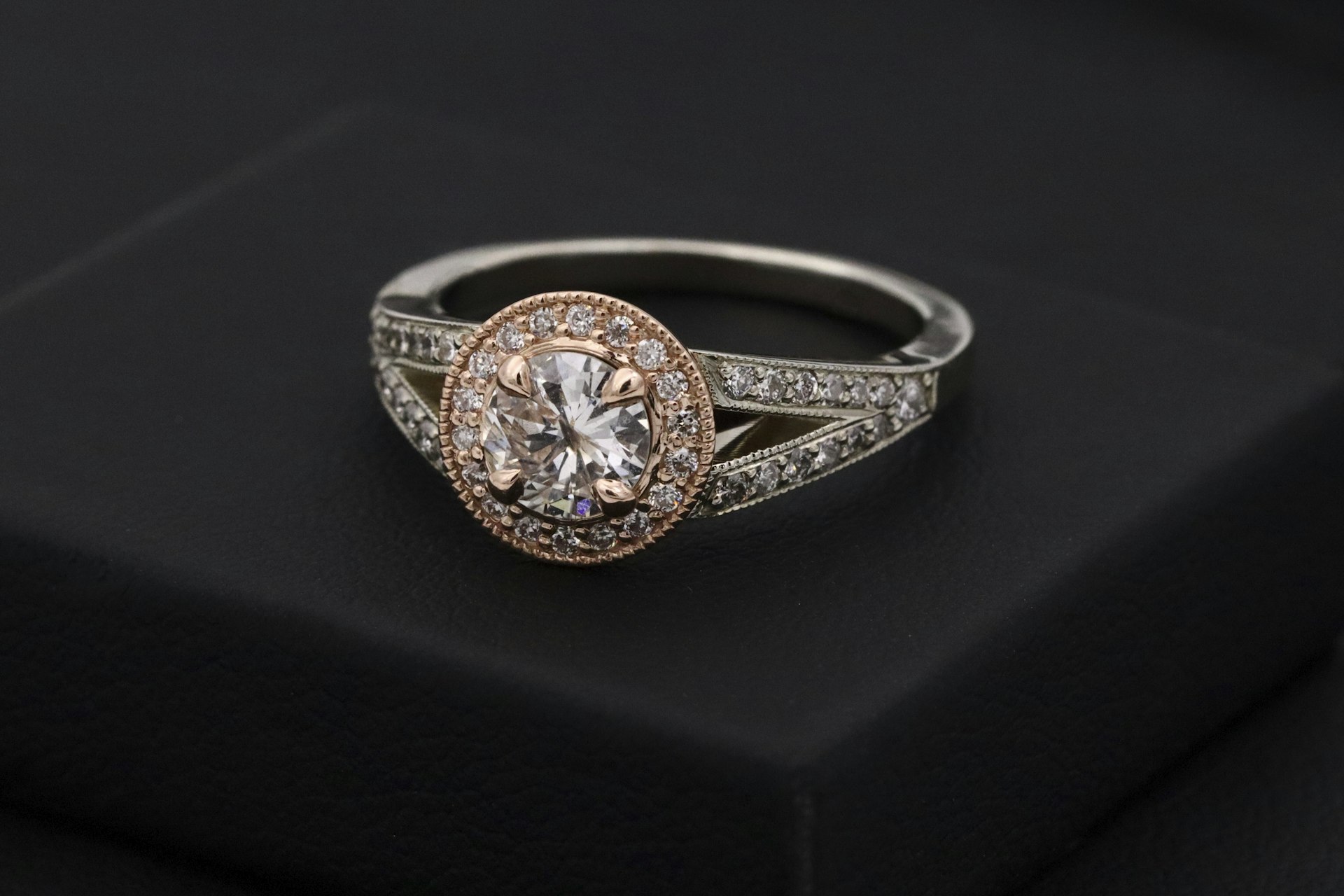
Blue Nile Review: Cut Is the C That Matters - and Lab-Grown Prices Are Still Falling
Back to Articles
Guides13 min readAugust 11, 2026

Blue Nile Review: Cut Is the C That Matters - and Lab-Grown Prices Are Still Falling

Blue Nile sells GIA-certified natural and IGI-certified lab-grown diamonds with 30-day free returns and free resizing. Cut is the C that determines how a diamond looks, and lab-grown prices are still falling.

By Med Consumer Watch Team
Blue Nile is one of the largest online diamond and fine jewellery retailers, selling loose diamonds, engagement rings, wedding bands and jewellery, with an extensive education section. Verified from published policy summaries — the retailer's own pages blocked automated access — 30-day free returns on eligible items in original unworn condition, free ring resizing within a stated period, natural diamonds certified by GIA and lab-grown diamonds certified by IGI. Buying a diamond online is genuinely a better deal than a high-street jeweller for most people, and the reason is structural: you can see the actual certificate and, frequently, high-magnification imaging of the specific stone, rather than being shown a tray under a jeweller's lighting designed to flatter everything on it. Two things decide whether you spend well. Cut is the only one of the 4Cs that determines how a diamond actually looks, and it is routinely the one people trade away to chase carat weight. And lab-grown diamond prices have fallen dramatically and continue to fall, which changes what you should expect from the purchase. This review contains affiliate links and we may earn a commission if you buy through them. The assessment is our own. Retailer pages blocked automated access; policy details from published summaries as indexed, verified August 12, 2026 — confirm directly.

The 4Cs, ranked by what actually matters

Cut, colour, clarity and carat are presented as four equal considerations. They are not. Cut is first, by a distance. Cut is not the shape — it is the quality of the proportions, symmetry and polish, and it determines how light behaves inside the stone. A poorly cut diamond leaks light out of the bottom and looks dull regardless of how good its other grades are. An excellently cut stone one colour grade lower and one clarity grade lower will out-sparkle it, and cost less. Buy Excellent or Ideal cut. Do not compromise here. For round brilliants, GIA grades cut; for fancy shapes it does not, which is why proportions and imaging matter more on those. Clarity is second, and the target is "eye clean" rather than a grade. Clarity describes inclusions under 10x magnification — and you are not going to view your ring under 10x magnification. VS1 and VS2 are almost always eye clean; SI1 frequently is; SI2 sometimes is. Paying for VVS or Flawless is paying for something invisible. Use the magnified image to check where the inclusions sit — one under the setting or near the edge matters less than one in the centre of the table. Colour is third, and context-dependent. The scale runs D (colourless) to Z. G to J is the value range for most peoplenear-colourless, and the difference is essentially invisible face-up once set. One important interaction: yellow and rose gold settings mask warmth, so you can drop further down the colour scale with them and lose nothing. Platinum and white gold show colour more. Carat is last, and it is the one everybody leads with. Price jumps sharply at the round numbers — 0.50, 0.90, 1.00, 1.50, 2.00 — because that is where demand concentrates. Buying just under a threshold — 0.90 rather than 1.00, or 1.90 rather than 2.00 — saves a substantial amount for a difference nobody can see. This is the single most effective money-saving move in diamond buying. And one more variable that is not a C: fluorescence. Some diamonds glow under UV. Strong fluorescence can slightly reduce price and, in higher colour grades, occasionally cause a hazy appearance — but faint to medium fluorescence is usually harmless and priced lower. For a near-colourless stone, medium fluorescence can be a genuine bargain, and it can even make a slightly warm stone look whiter.
  • The 4Cs | Priority | Practical guidance
  • Cut | First, by a distance | Excellent or Ideal - never compromise
  • Clarity | Second | Target "eye clean": VS1-SI1 usually; VVS is invisible money
  • Colour | Third | G-J is the value range; yellow gold masks warmth
  • Carat | Last | Buy just under 0.50/0.90/1.00/1.50/2.00 thresholds
  • Fluorescence | Not a C | Faint to medium is usually harmless and cheaper

Buy just below a carat threshold - 0.90 rather than 1.00, or 1.90 rather than 2.00. Prices jump sharply at round numbers because demand concentrates there, and the visible difference is essentially nil. It is the single most effective saving available in diamond buying.

GIA, IGI and lab-grown - what to know

The certificate is what you are actually buying, because grading is subjective enough that the grader matters. GIA — the Gemological Institute of America — is the reference standard. It is generally regarded as the strictest and most consistent grading laboratory, and a GIA-graded stone is the benchmark against which others are compared. IGI is also a recognised laboratory and is widely used for lab-grown diamonds, as here. The generally held view in the trade is that IGI grades somewhat more leniently than GIA on colour and clarity — meaning an IGI VS1 may not equal a GIA VS1. That is not a reason to avoid IGI stones; it is a reason not to compare grades across laboratories as though they are equivalent. Compare like with like. Read the certificate, not the summary. It shows the measurements, proportions, cut grade, clarity plot showing inclusion locations, fluorescence and any treatments. Check the certificate number is laser-inscribed on the girdle where applicable, and verify the number on the laboratory's own website — both GIA and IGI have free public verification tools. Do that before you pay. Now lab-grown, which needs a clear-eyed answer. They are real diamonds. Chemically, physically and optically identical to mined diamonds, distinguishable only by specialist equipment detecting growth characteristics. This is not a simulant like cubic zirconia or moissanite — it is diamond. They cost a fraction of natural. The gap is large and it has widened. And here is the point that matters and is frequently soft-pedalled: lab-grown diamond prices have fallen dramatically and continue to fall, because production capacity has increased enormously. Whatever you pay today, the equivalent stone will very likely cost less next year. What follows: Buy lab-grown for the look and the size you get for your money. You can afford a substantially larger, better-cut, higher-clarity stone, and it will look identical to anyone who is not a gemmologist with a machine. Do not buy lab-grown as a store of value. Resale is poor and falling. But be honest that natural diamond resale is also poor. Retail markup means most diamonds sell second-hand for a fraction of purchase price. A diamond is a purchase, not an investment, whichever kind you buy — and any salesperson framing it as an investment is telling you something untrue. And on insurance. Get an appraisal and add the ring to your home insurance or a specific jewellery policy, immediately. Loss, theft and damage are what actually happen to rings, and this costs a fraction of the stone.

Verify any diamond's certificate number on the issuing laboratory's own free public verification tool before paying, and check it is laser-inscribed on the girdle where applicable. Do not compare grades across laboratories as though equivalent - IGI is generally regarded as grading more leniently than GIA on colour and clarity.

Returns, settings and the practical bits

The 30-day free return window on eligible items is the term that makes online diamond buying workable, since you cannot see a stone in person first. Use it properly: Look at the stone in several lightings — daylight, indoor, and the dim restaurant lighting where a poorly cut stone shows itself. Diamonds are cut to perform in mixed light, and a jeweller's spotlit case is the least honest environment there is. Check it face-up at arm's length, which is how anyone will actually see it, rather than under a loupe. Confirm it is eye clean to you, not to a grading scale. Confirm the setting is comfortable and that the stone sits at a height you will not catch on things. What to confirm on the policy, since we could not verify it directly: the window start date (shipment or delivery), what counts as eligible, whether engraved or customised items are excluded, whether the free return applies to loose stones as well as finished rings, and any restocking or certificate fees. Published summaries mention GIA certificate fees, which is worth clarifying. On settings and metals: Platinum is denser, more durable in the long run and holds stones securely; it develops a patina and can be re-polished. It costs more. White gold is gold alloyed and rhodium-platedand the plating wears off, requiring re-plating every year or two. Nobody mentions this at purchase and it surprises people. Yellow and rose gold need no plating and mask warmth in the stone, letting you buy a lower colour grade. 14k is more durable than 18k; 18k is richer in colour and softer. On prongs and settings: six prongs hold more securely than four; bezel settings are the most secure and best for active hands; halo settings make a centre stone look larger and add cleaning complexity. Have prongs checked annuallya loose prong is how stones are lost, and most jewellers check free. Free resizing is offered within a stated period. Note that not all settings can be resized — full eternity bands and some intricate designs cannot — so if ring size is uncertain, ask before choosing the setting. And the honest budgeting note. The "two months' salary" convention was an advertising campaign, not a rule. Spend what you can comfortably afford. A well-cut smaller stone in a good setting looks better than a large poorly cut one, and nobody has ever asked to see a receipt.

Have the prongs on any ring checked annually - most jewellers do it free. A loose prong is the most common way a stone is lost, it is silent, and a two-minute check prevents the single most expensive thing that can go wrong with an engagement ring.

Frequently asked questions

What is Blue Nile's return policy? Published summaries indicate 30-day free returns on eligible items in original, unworn condition, with free ring resizing within a stated period. Confirm the window start, eligibility and any fees directly. Which of the 4Cs matters most? Cut, by a distance. It determines how light behaves in the stone and therefore how it looks. Buy Excellent or Ideal and compromise elsewhere. What clarity should I buy? Whatever is eye clean to you. VS1 and VS2 almost always are, SI1 frequently is. VVS and Flawless are money spent on something invisible without magnification. What colour grade? G to J is the value range and looks near-colourless face-up. Yellow and rose gold settings mask warmth, letting you go lower still. How do I save money? Buy just under a carat threshold — 0.90 instead of 1.00, 1.90 instead of 2.00. Prices jump at round numbers for a difference nobody can see. Is GIA better than IGI? GIA is generally regarded as the strictest and most consistent. IGI is a recognised laboratory widely used for lab-grown and is generally considered somewhat more lenient. Do not compare grades across laboratories as equivalent. Are lab-grown diamonds real? Yes — chemically, physically and optically identical to mined diamonds, and distinguishable only with specialist equipment. Should I buy lab-grown? For the look and size you get for the money, yes. Not as a store of value — prices have fallen dramatically and continue to fall. Do diamonds hold their value? Generally no. Retail markup means most sell second-hand for a fraction of purchase price. A diamond is a purchase, not an investment. What should I do after buying? Get it appraised and insured immediately, and have the prongs checked annually.

The Bottom Line

Our rating: 8.5 / 10. The right way to buy a diamond, provided you buy the right specification. Online diamond retail is structurally better than a high-street counter for most buyers, and the reason is transparency: you can read the actual certificate for the actual stone and frequently examine high-magnification imaging, rather than viewing a tray under lighting engineered to flatter. 30-day free returns and free resizing make that workable — you still get to see it in your own hands, in real light, before committing. Spend your money on cut. It is the only C that determines how a diamond looks, and it is the one people trade away to chase carat weight. Buy Excellent or Ideal, target "eye clean" rather than a clarity grade — VS1 to SI1 usually is, and VVS is money spent on something invisible — and sit in the G–J colour range, further down still if the setting is yellow or rose gold. Then buy just under a carat threshold: 0.90 rather than 1.00 saves a great deal for a difference nobody can see. On certificates: verify the number on the laboratory's own free tool before paying, and do not compare grades across laboratories — GIA is generally regarded as stricter than IGI, so an IGI VS1 and a GIA VS1 are not the same claim. On lab-grown, the honest position: they are real diamonds and they look identical, so buying one to get a bigger, better-cut stone is entirely rational. But prices have fallen dramatically and continue falling, so do not treat it as a store of value. Natural diamond resale is also poor — retail markup means most sell second-hand for a fraction of purchase price. A diamond is a purchase, not an investment, and anyone telling you otherwise is not being straight. Two things afterwards: insure it immediately, and have the prongs checked annually. Browse Blue Nile's diamonds and settings Informational only. Retailer pages blocked automated access; return window, eligibility, resizing terms and any certificate fees are from published summaries as indexed, verified August 12, 2026, and should be confirmed directly. Diamond grading is subjective and varies between laboratories - verify certificates on the issuing laboratory's own public tool. Diamonds generally resell for a fraction of retail price and should not be regarded as investments.

Medical Disclaimer

This article is for informational purposes only and is not intended as medical advice. Always consult with a qualified healthcare provider before making decisions about your health or medications. Individual experiences may vary.

Enter to Win a $1,788 CoreAge Rx Gift Card

Enter for a chance to use it toward eligible CoreAge Rx products and services.

The gift card may be applied toward eligible CoreAge Rx products and services. Prescription products additionally require completing the intake process and evaluation by a licensed healthcare provider, who alone decides eligibility and treatment. Winning does not guarantee that you will qualify for a GLP-1 medication or any other prescription treatment.

No purchase necessary. Prescription products require provider evaluation and approval. See Official Rules. Official Rules · Gift Card Terms · Privacy Policy · Terms