eufy Review: Check Your Insurance Before Paying $399 for a Breast Pump
eufy sells security cameras with no monthly fee, robot vacuums and breast pumps from $259.99 marked HSA/FSA eligible. Most health plans are required to cover a breast pump - check before you pay.
By Med Consumer Watch Team
eufy, Anker's smart home brand, sells across three quite different categories — security (outdoor and indoor cameras, PoE NVR systems, video doorbells, smart locks, alarm systems), cleaning (robot vacuums, robot lawn mowers) and mom and baby (wearable breast pumps, bottle washers, baby monitors).
Verified from its own site, August 13, 2026:a 30-day money-back guarantee and warranty processing; "Local Security*, No Monthly Fee" as a headline security claim, with an asterisk; a published Privacy Commitment; and prices including a wearable breast pump at $259.99 and an S2 Pro at $399.99, both marked HSA/FSA eligible; a SoloCam E30 at $249.98; an eufyCam S3 Pro at $669.99; and a Robot Vacuum Omni S2 at $1,462.97.The single most valuable thing in this review has nothing to do with the product quality, which is generally well regarded.It is this: under the Affordable Care Act, most health plans are required to cover breastfeeding support and supplies, including a breast pump, at no cost sharing.Before paying $259.99 or $399.99, call the number on your insurance card and ask what pump benefit you have.Many people are entitled to a pump at no cost, or to a credit toward an upgrade — and the benefit goes unused constantly because nobody mentions it at the point of sale.HSA/FSA eligibility, which the site does advertise, is a genuine benefit and a worse one than free.This review contains affiliate links and we may earn a commission if you buy through them. The assessment is our own. Informational only — not medical advice.
Breast pumps - the benefit, the hygiene and the rule about second-hand
Three things matter here, and the first will save some readers several hundred dollars.Check your insurance first.The ACA requires most non-grandfathered health plans to cover breastfeeding support, counselling and equipment for the duration of breastfeeding, without cost sharing.What that means in practice varies: some plans supply a specific pump through a durable medical equipment provider; some reimburse a purchase; some offer a credit toward an upgrade model.
Call the number on your insurance card and ask specifically: which pumps are covered, whether you need a prescription, whether there is a preferred supplier, when you can order relative to your due date, and whether upgrades are permitted with a top-up payment.
Medicaid coverage varies by state but frequently includes pumps.
WIC provides breast pumps and free lactation support in many areas, and it is significantly underused.
If you still buy privately, HSA and FSA funds cover breast pumps and supplies — that is well established, unlike many wellness purchases.
The rule about second-hand, which is genuinely important.Do not buy or accept a used personal-use breast pump.The FDA distinguishes between single-user pumps and multi-user pumps.Multi-user (often called hospital-grade) pumps are designed with barriers that prevent milk and other fluids entering the pump mechanism, and they can be safely used by more than one person with a new personal kit.Single-user pumps cannot be adequately cleaned and sterilised between users, because milk and moisture can enter internal parts you cannot reach. Sharing them risks transmitting infectious agents.Buying a used pump on a resale site is the specific scenario the FDA warns about.Replacing the tubing and flanges does not fix it.If cost is the barrier, use the insurance benefit or WIC rather than buying used.On cleaning, where CDC guidance is more specific than most people realise:Wash hands before handling pump parts.Take apart and rinse all parts that contact milk, then wash — ideally in a dedicated wash basin rather than directly in the sink, because sinks and drains harbour bacteria.
Air dry on a clean, dedicated drying rack or towel.Do not towel-dry, which can transfer germs.Sanitise parts daily if your baby is under two months old, was born prematurely, or has a weakened immune system.
Clean the pump dials, power switch and countertop with a disinfectant wipe.Store milk safely and follow storage time guidance.
On fit, which determines whether pumping works at all.Flange size is the most common cause of pain and poor output, and most people are using the wrong one — often the size that came in the box. Nipple diameter should be measured, and sizing frequently changes over the course of feeding.Pain while pumping is not normal and usually means a fit or suction problem, not a tolerance problem.When to seek help rather than a new gadget:Pain, cracked or bleeding nipples, which is a positioning or fit issue.
A hard, red, painful area of breast with fever or flu-like symptoms — that is mastitis and it needs prompt medical attention, not a stronger pump.
Concerns about supply, which are extremely common and often resolvable with support.
Ask for an IBCLC — an International Board Certified Lactation Consultant.Insurance frequently covers lactation support under the same ACA provision as the pump, and it is the highest-value intervention available.
Route to a breast pump | Cost | Notes
Insurance under the ACA | Often $0 | Most plans must cover it; call the number on your card
WIC | Free where available | Includes lactation support; underused
Medicaid | Varies by state | Frequently covered
Buy with HSA/FSA funds | Pre-tax | Well-established eligible expense
Buy outright | $259.99-$399.99 here | The most expensive route
Buy used | Do not | FDA warns single-user pumps cannot be safely shared
Never buy or accept a used single-user breast pump. The FDA warns these cannot be adequately cleaned between users because milk and moisture can enter internal parts, risking transmission of infectious agents - and replacing tubing and flanges does not fix it. Only multi-user, hospital-grade pumps are designed for shared use. If cost is the barrier, use your ACA insurance benefit or WIC instead.
Cameras, monitors and the privacy question
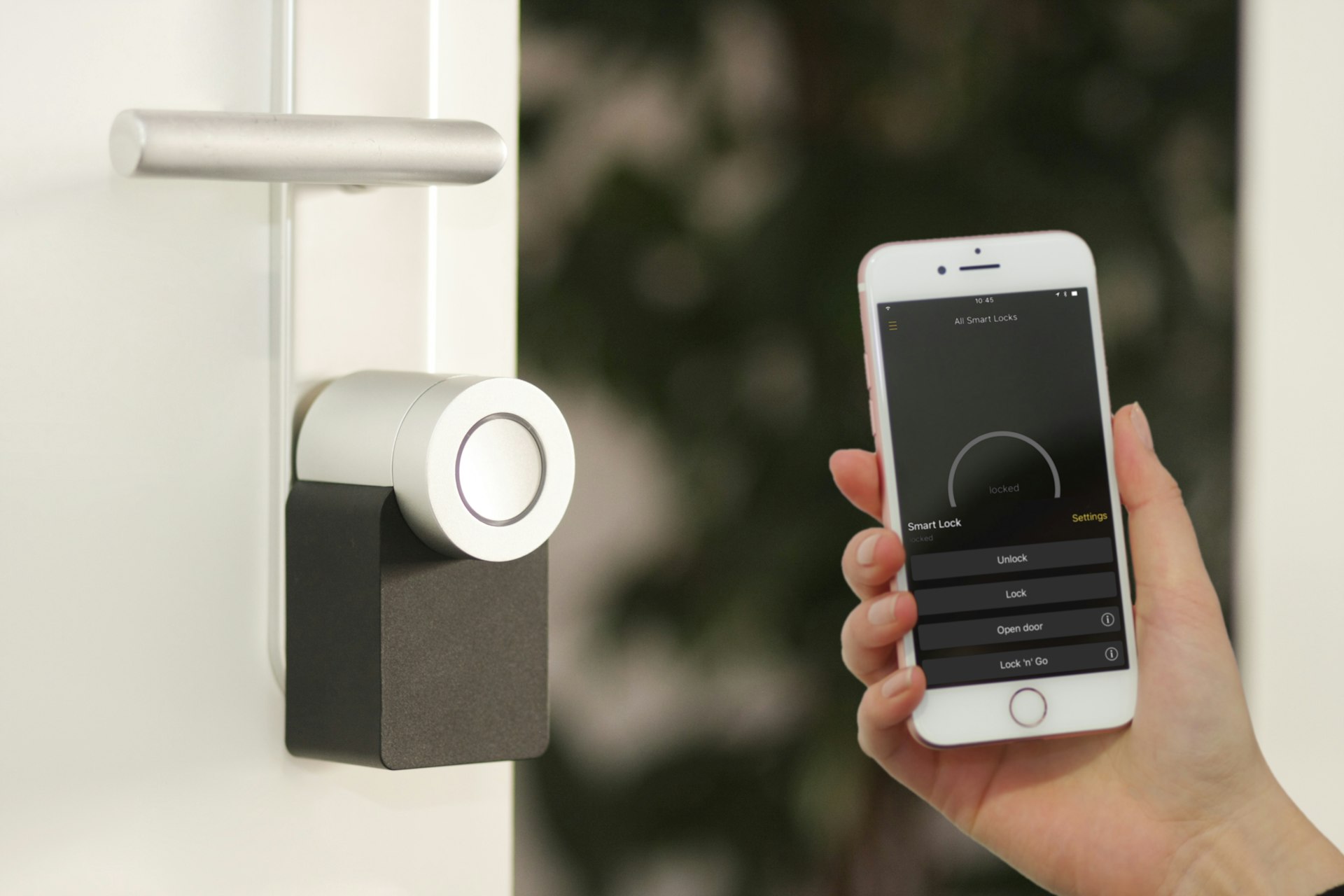
The security range is the largest part of the business, and the marketing centres on local storage with no monthly fee. That is a genuinely attractive proposition — and it deserves a careful reading.Why local storage matters.A camera that records to a base station in your house rather than to a company's servers means your footage is not sitting in someone else's data centre, is not subject to their retention policy, and does not stop working when you stop paying.For a security camera, that is the right architecture and it is a legitimate selling point.What to verify rather than assume.This brand has previously faced documented scrutiny over whether its local-storage claims fully matched its behaviour, following reporting that some event thumbnails were uploaded to cloud servers and that streams could be accessed under certain conditions.The company responded publicly and made changes.We are not able to independently audit current behaviour, and the headline claim on the site carries an asterisk — so read what the asterisk says.The practical questions to ask of any camera brand:What exactly is stored locally, and what touches the cloud?Notifications, thumbnails, AI processing and remote viewing all commonly involve servers even when recordings are local.Is footage encrypted at rest and in transit, and who holds the keys?What happens if the base station is stolen?Local-only storage means a burglar can remove the evidence — which is why some people accept a cloud backup for exactly this reason.What is the firmware update policy, and for how long?What is the company's policy on law enforcement requests?And the basics that matter more than any brand choice:Change default passwords, and never reuse a password across accounts.The overwhelming majority of consumer camera compromises are credential problems, not hacking.Turn on two-factor authentication.Keep firmware updated.Put cameras on a separate network segment or guest network if your router supports it.Think about placement.Do not point cameras into bedrooms or bathrooms, be aware of what you capture of neighbours and public space, and check state law — recording audio in particular is governed by wiretapping statutes, and some states require all-party consent.Tell guests, cleaners and carers about indoor cameras.Beyond the legal position, it is the decent thing to do.On baby monitors, where the safety issue is physical rather than digital.Cords are a strangulation hazard.Keep all cords — monitor cables, phone chargers, blind cords — at least three feet from the crib, and never place a monitor on or attached to the crib rail.Infant deaths from monitor cords are documented and the risk is entirely avoidable.Mount monitors on the wall well out of reach, and route the cable away from the cot.Baby monitors are not medical devices.Consumer monitors, including those that report breathing or oxygen readings, are not proven to reduce the risk of sudden infant death, and paediatric guidance is against relying on them for that purpose.They can also cause anxiety through false alarms.Safe sleep does the work: back to sleep every sleep, firm flat surface, fitted sheet and nothing else in the crib, room-sharing without bed-sharing.On smart locks, briefly:keep a physical key accessible outside the system, know what happens when the batteries die and keep spares, and think about fire egress — everyone in the household should be able to get out quickly without a phone.
Keep every cord - baby monitor cables, chargers, blind cords - at least three feet from a crib, and never attach a monitor to the crib rail. Infant strangulation deaths from monitor cords are documented and entirely preventable. Consumer baby monitors are not medical devices and are not proven to reduce the risk of sudden infant death.
Change the default password and turn on two-factor authentication the day any camera arrives. Almost every consumer camera compromise is a credential problem rather than a sophisticated attack - and no amount of local storage protects an account someone can log into.
Value, warranty and buying across the range
On the commercial terms.A 30-day money-back guarantee and a stated warranty process are reasonable, and the frequent promotional discounting means paying list price is rarely necessary — several products showed savings of $50 to $410 when we checked.Treat a struck-through price as a price rather than a saving, and check whether the discount is a recurring seasonal pattern before rushing.On the no-subscription proposition, which is the strongest commercial argument here.Competing camera ecosystems commonly charge $3 to $20 a month for cloud recording and features.Over five years, avoiding a $10 monthly subscription is $600 — which reframes a $669.99 camera system entirely. If you intend to keep a system for years, this maths is the reason to buy into this brand.Do check what genuinely works without a subscription, since some brands reserve features for paid tiers even alongside local storage. Ask specifically about AI detection, extended history and multi-camera views.On robot vacuums, where the range extends to $1,462.97: judge on the running costs and the practicalities rather than suction figures.Filters, brushes, mop pads and dust bags are consumables — budget for them.Self-emptying bases reduce the chore and use proprietary bags.And the honest limitations remain: cords, socks and pet accidents defeat any robot, so the floor still needs picking up first.If anyone in the household has allergies or asthma, look for a sealed filtration system — a vacuum that lifts dust and then leaks it back out is worse than useless for that purpose.Who this brand suits:people who specifically want camera coverage without a monthly fee and are willing to manage their own security hygiene; households wanting a broad ecosystem from one app; and — with the insurance caveat above — parents who have checked their benefit and still want a specific wearable pump.Who should look elsewhere:anyone who wants an audited, independently certified privacy position, who should read the current documentation carefully rather than the headline; anyone who needs professional monitoring with a guaranteed emergency response, which is a different product category; and anyone about to pay full price for a breast pump without calling their insurer first.One general note on health-adjacent purchases from consumer electronics brands.A wearable breast pump is a regulated medical device; a baby monitor generally is not; a camera certainly is not.When a single brand spans all three, it is worth checking which regulatory category the specific product falls into, and looking for FDA clearance information on anything making a medical claim.A well-made consumer gadget and a cleared medical device are different things, and the distinction is easy to lose inside a single shopping cart.
Work out the five-year cost, not the sticker price. Avoiding a $10 monthly camera subscription saves $600 over five years, which changes the comparison with a cheaper camera entirely - just confirm which features genuinely work without a paid tier before buying.
Frequently asked questions
What does eufy sell?
Security cameras, PoE NVR systems, video doorbells, smart locks and alarm systems; robot vacuums and lawn mowers; and a mom and baby range including wearable breast pumps, bottle washers and baby monitors.
What does it cost?
Prices seen on August 13, 2026 included a wearable breast pump at $259.99 and an S2 Pro at $399.99, a SoloCam E30 at $249.98, an eufyCam S3 Pro at $669.99 and a Robot Vacuum Omni S2 at $1,462.97, with frequent promotional discounts.
Will my insurance pay for a breast pump?
Most likely. The ACA requires most health plans to cover breastfeeding support and supplies including a pump, without cost sharing. Call the number on your insurance card and ask which pumps are covered, whether you need a prescription and whether upgrades are allowed.
Are they HSA/FSA eligible?
The site advertises the pumps as such, and breast pumps are a well-established eligible expense. Insurance coverage is still better than pre-tax spending.
Can I buy a used breast pump?
No. The FDA warns that single-user pumps cannot be adequately cleaned between users because milk and moisture can enter internal parts. Only multi-user hospital-grade pumps are designed for shared use.
How should I clean pump parts?
Wash hands first, rinse and wash parts in a dedicated basin rather than directly in the sink, air dry on a clean dedicated rack, and sanitise daily if your baby is under two months, premature or immunocompromised.
Why does pumping hurt?
Usually flange fit. Most people use the size that came in the box rather than a measured size, and sizing changes over time. Pain is not normal — ask an IBCLC, which insurance often covers under the same provision as the pump.
Is "no monthly fee" genuine?
Local storage without a subscription is a real architecture and a real saving. The headline claim carries an asterisk — read it, and ask what genuinely works without a paid tier.
Is the privacy claim reliable?
The brand has previously faced documented scrutiny over whether local-storage claims fully matched behaviour, responded publicly and made changes. We cannot independently audit current behaviour — read the current privacy documentation, and in all cases change default passwords and enable two-factor authentication.
Are baby monitors safe?
The digital risk is manageable; the physical one is the cord. Keep all cords at least three feet from the crib and never attach a monitor to the rail. Monitors are not medical devices and are not proven to reduce sudden infant death risk.
What about smart locks?
Keep a physical key accessible outside the system, keep spare batteries, and make sure everyone can get out quickly in a fire without needing a phone.
The Bottom Line
Our rating: 8 / 10. A strong, broad range with a genuinely differentiated commercial model — and one piece of advice that matters more than the product review.
Before buying a breast pump here, call your insurer.Under the ACA, most health plans must cover breastfeeding support and supplies including a pump, without cost sharing.Many people are entitled to a pump at no cost or to a credit toward an upgrade, and Medicaid and WIC frequently cover them too.HSA/FSA eligibility, which the site advertises, is genuine and still worse than free.And never buy a used single-user pump — the FDA warns they cannot be adequately cleaned between users, and new tubing does not fix it.On the security side, the no-subscription model is the strongest argument for this brand.Competing ecosystems commonly charge $3 to $20 a month, so avoiding a $10 subscription is $600 over five years — which reframes the price of a camera system entirely. Local storage is also the right architecture for footage you would rather not have sitting on someone else's servers.Read the asterisk on that claim, though.The brand has previously faced documented scrutiny over whether its local-storage marketing fully matched its behaviour, responded publicly and made changes.We cannot audit current behaviour — so read the current privacy documentation, ask what touches the cloud, and confirm which features work without a paid tier.Then do the thing that matters most regardless of brand: change default passwords and turn on two-factor authentication, because almost every consumer camera compromise is a credential problem.If you buy a baby monitor, the risk is physical rather than digital.Keep every cord at least three feet from the crib and never attach a monitor to the rail — infant strangulation deaths from monitor cords are documented and entirely preventable. And monitors are not medical devices; they are not proven to reduce sudden infant death risk, and safe sleep practice is what does the work.On robot vacuums, budget for consumables and remember the floor still needs picking up first.If anyone has asthma or allergies, look for sealed filtration.Check eufy's current range and offersInformational only, not medical advice. Prices and terms verified August 13, 2026 and subject to change; confirm warranty, return and privacy terms directly. Check your insurance breast pump benefit before purchasing. Never use a second-hand single-user breast pump. Keep all cords at least three feet from an infant's sleep space, and consult a clinician or IBCLC for pain, mastitis symptoms or supply concerns.
This article is for informational purposes only and is not intended as medical advice. Always consult with a qualified healthcare provider before making decisions about your health or medications. Individual experiences may vary.
Enter for a chance to use it toward eligible CoreAge Rx products and services.
The gift card may be applied toward eligible CoreAge Rx products and services. Prescription products additionally require completing the intake process and evaluation by a licensed healthcare provider, who alone decides eligibility and treatment. Winning does not guarantee that you will qualify for a GLP-1 medication or any other prescription treatment.