Trivver Review: This Is Enterprise Ad-Tech, Not a Health Product - and the Link Points at a Staging Server
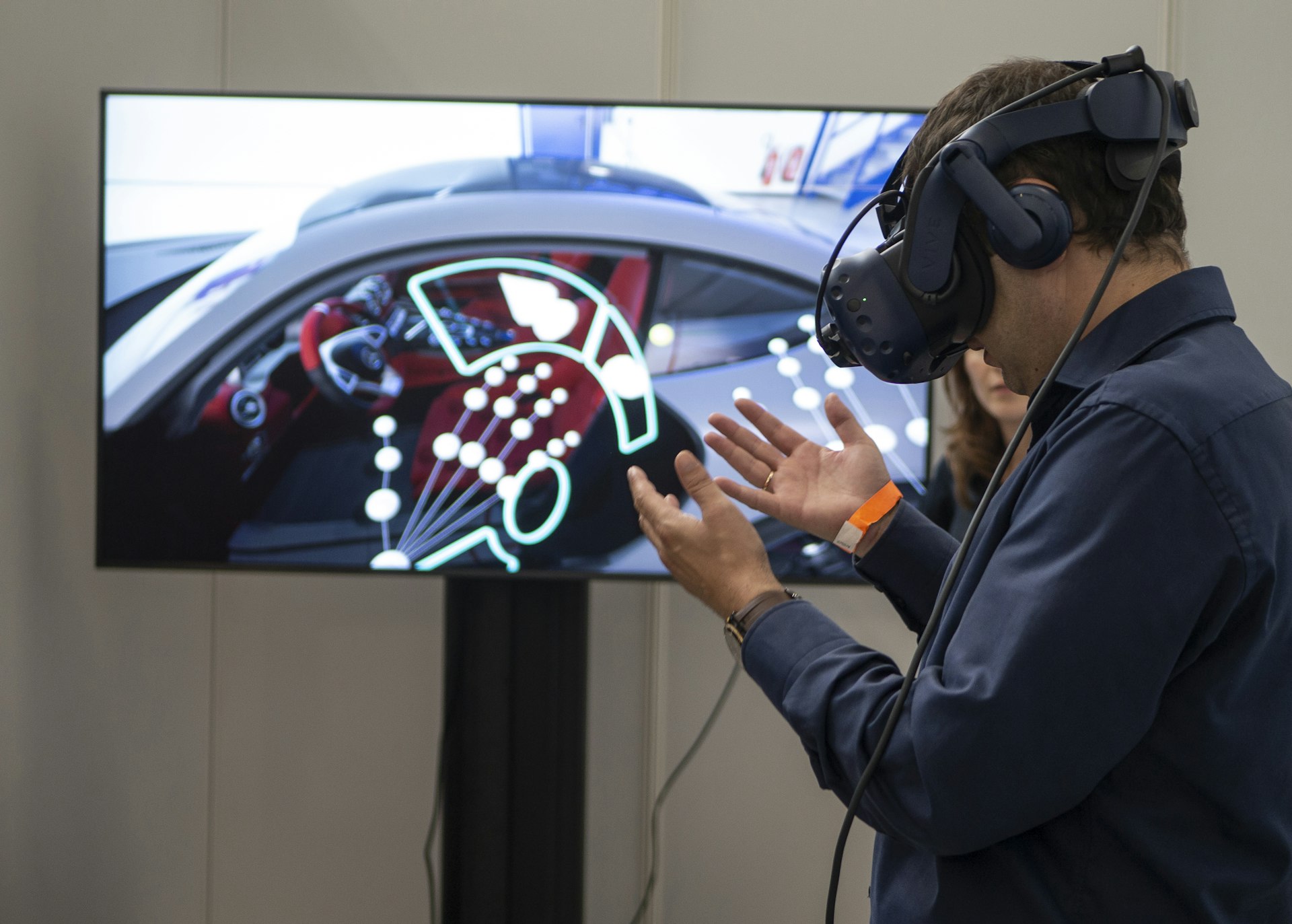
Trivver is a business-to-business spatial advertising and measurement platform for AR, VR and games. It is not a consumer health product, and the program's stated website is a staging environment.
By Med Consumer Watch Team
This is a status report rather than a product review, because there is nothing here for a reader of this site to buy.The affiliate program lists its website as `staging.trivverportal.com`.A staging environment is a pre-production server used for testing, not a customer-facing site — and when we requested it on August 13, 2026 it returned effectively nothing: a 15-byte response.The company's actual site describes something quite different from a health product.Trivver presents itself as a "Spatial AI Measurement" platform — "the first system to measure and monetize objects in 3D environments" — turning objects in games, AR and AI-driven worlds into measurable, revenue-generating advertising assets.Its use cases are listed as immersive training, smart advertising, retail and commerce, and in-game advertising; its navigation offers "request a demo" and a portal login; and it names Google Cloud, ByteDance and NVIDIA among those it works with.In other words: this is enterprise business-to-business advertising technology.It is sold to game studios, brands and platforms, not to consumers, and there is no product a reader of a health consumer publication would purchase.The brief we received carried a health-and-medical-accuracy section, which appears to be a categorisation error rather than a description of the product.So the honest verdict is that there is nothing to review and nothing to buy.What follows is the part that is genuinely useful to this audience: what is actually true about virtual and augmented reality in health, since that is the only reason someone reading this site would land here.This page contains an affiliate link and we may earn a commission if you use it. There is no consumer product behind it. The assessment is our own. Informational only — not medical advice.
What we found
Setting out the facts plainly, since the value of this page is the check itself.The program's stated website is `staging.trivverportal.com`.On August 13, 2026 it returned a 15-byte response — effectively empty.A staging URL is an internal pre-production environment; listing one as a public destination is an error rather than a business model.The company's live site is a corporate B2B site.It describes spatial measurement and monetisation of objects in 3D environments for advertising, commerce and engagement across games, AR and AI-driven worlds, with "request a demo" as the primary call to action and a partner portal login.It is not a health or prescription product, despite the brief's health-accuracy section. The only health-adjacent reference on the company's site is to immersive training simulations for military and medical training — which is a training technology sold to institutions, not a consumer health product.We cannot verify what the affiliate program was intended to promote, whether a consumer offering exists or is planned, or whether the staging URL is a placeholder. We are reporting what the addresses return and what the company says about itself.Why this happens, and why it is worth documenting.Affiliate networks list programmes supplied by advertisers and sub-networks, and nothing automatically verifies that a destination works, that a product is consumer-facing, or that a category tag is accurate.This is the fourth programme in recent weeks where the stated destination did not serve a functioning consumer storefront — the others being a dead shop domain, a parked domain and a wound-down company.The practical lesson for readers is small and useful:Check the address bar before entering anything.A staging subdomain, a parked page, a certificate warning or a site that will not load are all reasons to stop.A padlock icon means the connection is encrypted, not that the business is real or that the product exists.If a "health product" turns out to be enterprise software when you look at the vendor's own site, that discrepancy is the answer.There is nothing to dispute or recover here, because there is nothing being sold to consumers.If you arrived looking for a health product, you were looking in the wrong place — and the rest of this page is the information you were probably actually after.
The company's live corporate site | B2B spatial advertising and measurement platform
Consumer product | None found
Health product | None - the brief's health tag appears to be a categorisation error
The address listed for this program is a staging environment - an internal pre-production server - and it returns effectively nothing. Do not enter personal or payment details at a staging URL under any circumstances; such environments frequently lack the protections of production systems.
VR and AR in health - what is actually true
Since immersive technology is the subject, here is the accurate consumer picture, which is more interesting than the marketing around it.What has genuine regulatory backing.The FDA has authorised a prescription virtual reality system for the reduction of chronic lower back pain in adults — an eight-week programme of cognitive behavioural therapy and relaxation techniques delivered in VR.That is a real, cleared medical device available on prescription, and it is the clearest example of VR therapeutics moving from claim to evidence.What has reasonable supporting evidence:Distraction analgesia.VR used during painful procedures — wound care, burn dressing changes, cannulation, dental work — reduces reported pain and anxiety in a number of studies.The mechanism is straightforward and the effect is real.Exposure therapy for phobias and PTSD.Virtual reality exposure has a genuine evidence base as a delivery method for established therapy, and it is used clinically.Rehabilitation.VR-based motor rehabilitation after stroke and in some neurological conditions shows promise as an adjunct, chiefly by making repetitive exercise tolerable.Medical and surgical training.Simulation training is well established and improves procedural skill acquisition — this is the "immersive training" use case, and it is real.What does not have good evidence:consumer VR apps marketed for anxiety, depression, sleep, meditation or general wellness.Some may be pleasant and some may help individuals; a headset does not turn an unevidenced intervention into a treatment, and none of it substitutes for care for a diagnosed condition.How to tell the difference:ask whether a product is FDA-cleared or authorised, and for what specific indication.A cleared device names its indication precisely. A wellness app describes feelings."Clinically studied" is not "cleared", and neither is "developed with clinicians".On safety, because headsets have real physical effects:Cybersickness — nausea, dizziness, sweating, disorientation — is common, particularly with movement that does not match your body's sense of motion. Start with short sessions, use seated experiences and teleport locomotion, stop at the first symptom rather than pushing through, and know that symptoms can persist for a while afterwards.Do not drive or operate machinery immediately after a session if you feel any disorientation or visual disturbance.
Eye strain and discomfort are common with prolonged use.Take breaks — the 20-20-20 habit applies — and know that headsets do not cause permanent eye damage but do cause genuine fatigue.Photosensitive epilepsy.Headsets carry seizure warnings for good reason.Anyone with a history of seizures or photosensitivity should take medical advice before use.Physical injury.Clearing the play space is not optional — collisions with furniture, walls and other people are the most common VR injury by a wide margin.Children.Most major headsets set a minimum age, typically 13.The reasons include fit — headsets designed for adult interpupillary distance sit poorly on smaller faces — as well as content and time-use concerns.Follow the manufacturer's age guidance.Balance and falls.Older adults and anyone with balance problems should use VR seated.Hygiene.Shared headsets transmit skin and eye infections; wipe facial interfaces between users, and do not share a headset if anyone has conjunctivitis.If you are considering VR for a health reason — pain, anxiety, rehabilitation — talk to your clinician.There are cleared options for specific indications, some are prescribed, and knowing which is which is exactly what a clinician is for.
Headsets carry seizure warnings for good reason - anyone with a history of seizures or photosensitivity should take medical advice before use. Stop at the first sign of cybersickness rather than pushing through, do not drive while disoriented afterwards, clear the play space to prevent collisions, and follow the manufacturer's minimum age guidance, typically 13.
Ask whether a VR health product is FDA-cleared or authorised and for exactly which indication. A cleared device names its indication precisely; a wellness app describes how you will feel. "Clinically studied" and "developed with clinicians" are not the same as cleared.
Frequently asked questions
What is Trivver?
A business-to-business spatial advertising and measurement platform — it describes itself as measuring and monetising objects in 3D environments across games, AR and AI-driven worlds, with use cases in immersive training, advertising, retail and in-game advertising.
Is it a health product?
No. The brief we received carried a health-accuracy section, which appears to be a categorisation error. The only health-adjacent element is immersive simulation for medical and military training, sold to institutions.
Can I buy anything?
No. It is enterprise software sold via demo requests and a partner portal, not a consumer product.
Why does the program point to a staging site?
We do not know. `staging.trivverportal.com` is a pre-production environment and it returned effectively nothing when we checked on August 13, 2026. Listing one publicly is an error rather than a business model.
Should I enter details there?
No. Never enter personal or payment details at a staging URL — such environments frequently lack the protections of production systems.
Is any VR product actually approved for health use?
Yes. The FDA has authorised a prescription VR system for reducing chronic lower back pain in adults, delivering an eight-week programme of cognitive behavioural therapy and relaxation techniques.
Does VR help with pain?
There is reasonable evidence for distraction analgesia during painful procedures such as wound care and dressing changes, where VR reduces reported pain and anxiety.
Does VR help anxiety or PTSD?
Virtual reality exposure therapy has a genuine evidence base as a delivery method for established therapy, used clinically. General consumer wellness apps are a different thing with much weaker evidence.
What is cybersickness?
Nausea, dizziness, sweating and disorientation caused by mismatch between visual motion and your body's sense of movement. Start with short seated sessions, stop at the first symptom, and do not drive while disoriented.
Is VR safe for children?
Most major headsets specify a minimum age, typically 13, partly because headsets are built for adult interpupillary distance and fit poorly on smaller faces. Follow the manufacturer's guidance.
Does VR damage your eyes?
There is no evidence of permanent damage, but eye strain and fatigue with prolonged use are real. Take regular breaks.
The Bottom Line
Our rating: not rated — there is no consumer product.Trivver is enterprise business-to-business advertising technology.Its own site describes a spatial measurement platform that turns objects in games, AR and AI-driven environments into measurable, monetisable advertising assets, sold through demo requests and a partner portal.It is not a health or prescription product, and the health tag on the brief we received appears to be a categorisation error.The address listed for the programme is `staging.trivverportal.com` — a pre-production staging environment, which returned effectively nothing when we checked.Never enter personal or payment details at a staging URL; those environments frequently lack the protections of production systems.There is nothing here to buy, dispute or recover, so the useful part of this page is what is actually true about immersive technology and health.Some of it is genuinely established.The FDA has authorised a prescription virtual reality system for reducing chronic lower back pain in adults, delivering an eight-week cognitive behavioural and relaxation programme.VR distraction during painful procedures has reasonable evidence.Virtual reality exposure therapy is a legitimate delivery method for established phobia and PTSD treatment.And simulation training genuinely improves procedural skill acquisition, which is the "immersive training" use case.Most consumer VR wellness apps are not in that category.The test is simple: ask whether a product is FDA-cleared or authorised and for exactly which indication.A cleared device names its indication precisely; a wellness app describes how you will feel, and "clinically studied" is not the same as cleared.And if you use a headset, the safety points are real.Stop at the first sign of cybersickness rather than pushing through, and do not drive while disoriented afterwards.Clear the play space, because collisions are by far the most common VR injury.Anyone with a history of seizures or photosensitivity should take medical advice first.Follow the minimum age guidance, typically 13.And use it seated if you have balance problems.The address listed for this program, for verification only — there is nothing to purchaseReporting reflects what these addresses returned on August 13, 2026 and may change; we cannot verify the company's intentions for any consumer offering. Informational only, not medical advice. Consult a clinician before using virtual reality for a health purpose, particularly with a history of seizures, photosensitivity, balance problems or vestibular disorders.
This article is for informational purposes only and is not intended as medical advice. Always consult with a qualified healthcare provider before making decisions about your health or medications. Individual experiences may vary.
Enter for a chance to use it toward eligible CoreAge Rx products and services.
The gift card may be applied toward eligible CoreAge Rx products and services. Prescription products additionally require completing the intake process and evaluation by a licensed healthcare provider, who alone decides eligibility and treatment. Winning does not guarantee that you will qualify for a GLP-1 medication or any other prescription treatment.