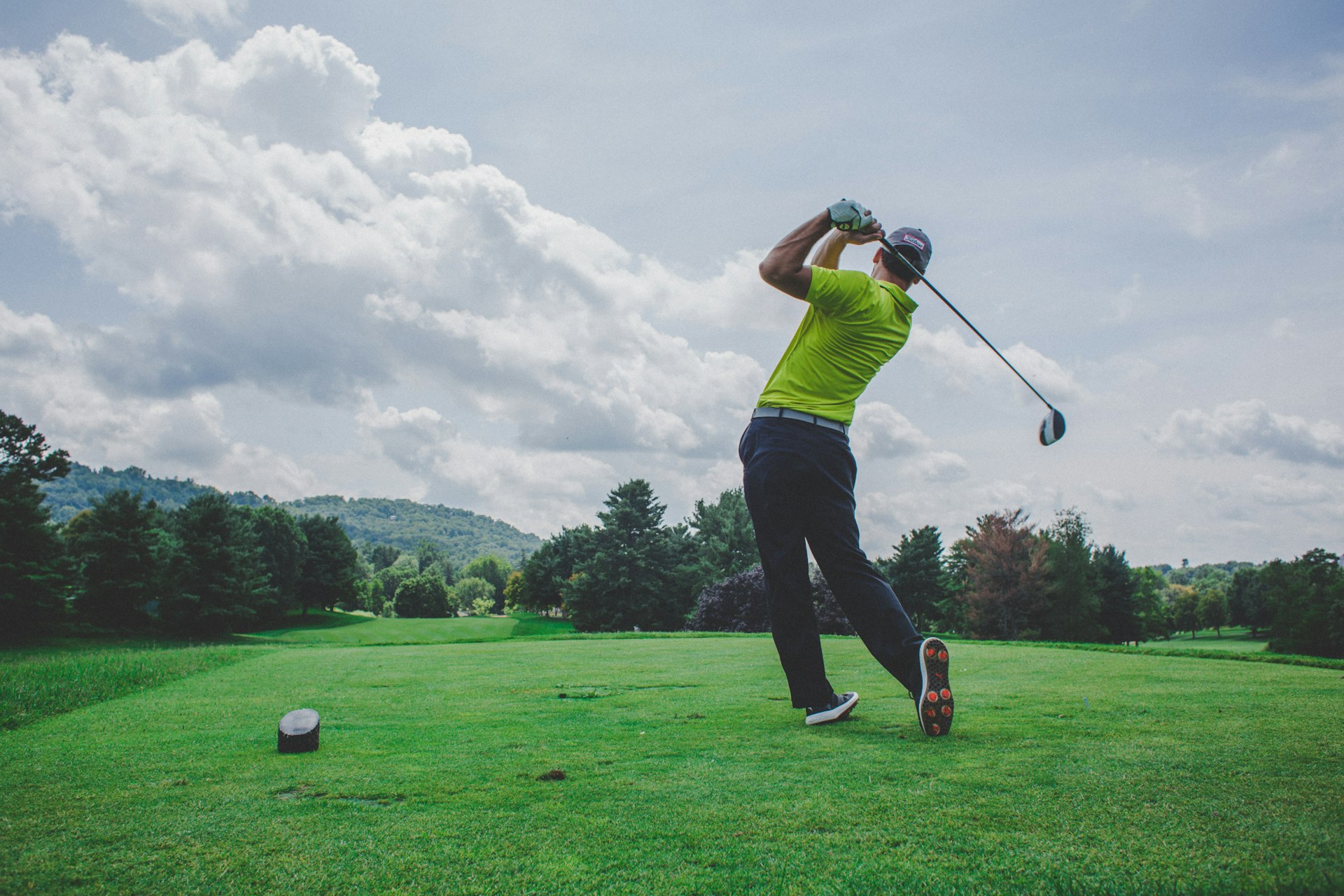
Golfballs.com Review: Walk the Course - Riding the Cart Removes Most of the Health Benefit
Golfballs.com sells custom-printed and brand-name golf balls with no minimums or setup fees. The strongest health finding is not about equipment: walking 18 holes is real exercise, and a cart removes it.
By Med Consumer Watch Team
Golfballs.com, founded in 1995, sells golf balls, clubs and apparel from major brands, and positions itself as "the World Leader in Golf Customization" — names, messages, photos, logos and monograms printed on balls with no minimums and no setup fees, including AI-assisted artwork generation.
Verified from its own site, August 13, 2026:custom logo balls (281 listings), custom player number, and logo overruns (162 listings); multi-dozen packs from major brands; a golf ball subscription; a 100% satisfaction guarantee; a published return policy and shipping policy; and prices including $39.99, $42.99, $44.99, $54.99, $57.99 and a "2 for $100" offer.Two genuinely useful buying notes before the health section.Logo overruns are the value play.These are balls printed with a corporate or event logo in excess of what was ordered — identical premium balls from major manufacturers, sold at a discount because somebody else's logo is on them.If you do not mind a company name on your ball, this is the cheapest route to a premium ball there is.And personalised products are generally non-returnable.A satisfaction guarantee usually cannot apply to something printed with your name on it — check that specific exclusion before ordering, and proofread your customisation, because a typo is permanent.But the most useful thing this review can tell a golfer has nothing to do with balls: walk the course.The health benefit of golf is almost entirely in the walking, and riding a cart removes it.This review contains affiliate links and we may earn a commission if you buy through them. The assessment is our own. Informational only — not medical advice.
Walking, and the actual health case for golf
Golf has a better health evidence base than most people expect, and it depends almost entirely on one variable.Walking 18 holes is genuine moderate physical activity.A full round on foot typically covers around four to six miles, and readily produces 10,000 or more steps — often considerably more with a hilly course.Carrying or pushing a bag adds load.The evidence base:research reviews have associated regular golf participation with improved cardiovascular risk markers, better balance and muscle endurance in older adults, and — in some analyses — increased longevity.The mechanism is unremarkable: several hours of low-intensity walking, repeated regularly, in daylight, usually with other people.That is close to an ideal exercise prescription for older adults, which is why it shows up well.Riding a cart removes most of it.Studies comparing walking and riding golfers find substantially higher energy expenditure and step counts among walkers.A round in a cart is a pleasant afternoon; a round on foot is exercise.The federal Physical Activity Guidelines recommend at least 150 minutes of moderate aerobic activity weekly plus muscle strengthening twice a week.A walked round of golf can cover a large share of the aerobic component in one outing.Practical points:Push carts are a good middle option if carrying is too much — you keep the walking and lose the load.
Carrying a bag adds intensity and adds shoulder and back load.Use a double strap, keep the bag light, and alternate shoulders.Nine holes walked beats eighteen ridden for most purposes.
On injuries, which are common and mostly preventable:Low back pain is the most common golf complaint, driven by the rotational forces of the swing. Core strength, hip mobility and thoracic rotation reduce it, and lessons that improve mechanics reduce it more than equipment does."Golfer's elbow" — medial epicondylitis — affects the inner elbow, while lateral epicondylitis or "tennis elbow" is more common in golfers than the name suggests. Both respond to load management, grip size adjustment and eccentric strengthening rather than rest alone.Wrist and shoulder injuries are frequent, particularly from hitting the ground or a root.
Warm up.Arriving late and hitting a driver cold is how people injure themselves.Five to ten minutes of movement and some easy swings materially reduces risk.Lift the bag properly — with the legs, not by twisting.
And a specific caution: golf is a common activity among people with cardiovascular disease.If you have a heart condition, discuss activity with your clinician, know your own warning signs, and take chest pain, unusual breathlessness or dizziness seriously rather than finishing the hole.Many courses now carry an automated external defibrillator — it is worth knowing where it is, and knowing that early defibrillation is the single largest determinant of survival in cardiac arrest.
Push cart | Keeps the walking, removes the carrying load
Carrying the bag | Adds intensity and shoulder and back load
Riding a cart | Removes most of the health benefit
Nine holes walked | Better than eighteen ridden for most purposes
Do not push through chest pain, pressure, unusual breathlessness, dizziness or palpitations to finish a hole. Golf is a popular activity among people with cardiovascular disease, and early recognition matters - as does knowing where the course's defibrillator is, since early defibrillation is the largest single determinant of survival in cardiac arrest.
Lightning and sun - the two environmental risks
A golf course is an open expanse dotted with tall isolated trees and metal objects, occupied for four hours at a stretch. Both of the environmental risks follow from that.Lightning.Golf courses are a well-recognised high-risk setting, and lightning deaths on courses are a documented recurring event.The rule that works: When Thunder Roars, Go Indoors.If you can hear thunder, you are close enough to be struck.The 30-30 guideline:if you see lightning and hear thunder within 30 seconds, seek shelter immediately — and wait 30 minutes after the last thunder before returning.The tail of a storm is when many strikes occur, and people return too early.Substantial shelter means a fully enclosed building or a hard-topped metal vehicle with the windows up.A golf cart is not shelter. An open rain shelter on a course is not shelter. A tree is the worst possible choice.Drop the clubs and the umbrella.A raised metal umbrella on an open fairway is exactly the wrong object to be holding.Do not wait for rain.Strikes occur ahead of and behind the visible storm, sometimes miles from it.If someone is struck, they carry no electrical charge — begin CPR immediately and call 911.Cardiac arrest is the main cause of death from lightning strike and survival depends on immediate resuscitation.Sun exposure, which is the slower risk and the more certain one.Four to five hours on an open course is substantial UV exposure, repeated weekly through a season and across decades. Golfers have measurably elevated cumulative exposure, and outdoor sports participants show elevated rates of skin cancer.Broad-spectrum SPF 30 or higher, applied generously — about a quarter to half a teaspoon for face and neck — and reapplied every two hours and after sweating or towelling. One application at the first tee does not cover a round.Cover what you can.A wide-brimmed hat beats a cap, because a cap leaves the ears and the back of the neck exposed — which are common sites of skin cancer in golfers.A UPF-rated long-sleeve sun shirt is more reliable than sunscreen because it does not wear off.Sunglasses with UV protection.Cumulative UV exposure is associated with cataract and other eye conditions.Do not neglect the lips, the backs of the hands and the ears.
Check your skin.Any new or changing mole, a sore that does not heal within a few weeks, or a rough scaly patch on sun-exposed skin needs a doctor.Early detection changes outcomes substantially.And heat, briefly:drink water regularly rather than waiting for thirst, take shade at the turn, and know that confusion in a hot player is heat stroke until proven otherwise — a 911 call, with cooling started immediately.
If you can hear thunder, you are close enough to be struck. Seek substantial shelter - a fully enclosed building or hard-topped vehicle with windows up - and wait 30 minutes after the last thunder. A golf cart, an open course shelter and a tree are not shelter, and a raised umbrella on an open fairway is the worst object to hold. Lightning strike victims carry no charge: begin CPR immediately and call 911.
Wear a wide-brimmed hat rather than a cap. A cap leaves the ears and the back of the neck exposed, and those are among the most common sites of skin cancer in golfers - the two places sunscreen is most often missed and most reliably burned across a four-hour round.
Buying balls well
On the customisation, which is the site's specialty and genuinely useful.No minimums and no setup fees is the meaningful part. Traditional logo printing carries setup charges that make small orders uneconomic; removing them makes a single personalised dozen viable as a gift.Personalised balls are excellent gifts and terrible impulse buys — a name, a date, a photograph or a company logo on a dozen balls is memorable, and it is also non-returnable.
Proofread everything.Check spelling, check the preview, and check it twice.A misspelt name on twelve golf balls is permanent.Allow production time.Customisation adds days, and dated gifts need ordering well ahead.Confirm the return exclusion on personalised items before ordering. A satisfaction guarantee almost never covers a custom-printed product, and that is reasonable rather than sharp practice.On logo overruns, the genuine bargain:These are premium balls from major manufacturers, printed with a corporate or event logo, sold at a discount because the original order exceeded what was needed.They are the same ball.Construction, cover and performance are identical to the retail version.If you do not mind an unfamiliar company name, this is the cheapest access to a premium ball there is — and for a golfer who loses balls, that matters more than most equipment decisions.
On used, recycled and refinished balls, where the terminology matters:"Recycled" or "used" balls have been recovered and cleaned.Performance is broadly intact if the cover is undamaged, and grading systems describe cosmetic condition."Refinished" balls have been stripped and repainted.That process can alter the cover and the dimple geometry, and refinished balls have been the subject of longstanding disputes about whether performance matches the original.The two words are not interchangeable, and a listing that uses them loosely is worth avoiding.Long submersion degrades performance.A ball that spent a season in a pond is not the ball it was.On choosing a ball at all, briefly and honestly:Ball choice matters far less for most amateurs than lessons do.A player who slices does not need a different ball.Compression and feel are real but subtle, and marketing claims about distance gains should be treated with the scepticism you would apply to any performance claim.
Buy in bulk if you lose balls, because the cheapest way to enjoy golf is not to grieve over a ball in the water.
Check the subscription terms if you use the ball subscription — frequency, recurring price, skip and cancellation route, as with any recurring purchase.
Who this suits:anyone buying a golf gift, ordering event or corporate balls, or wanting premium balls cheaply through overruns.The customisation capability with no minimums is a genuine differentiator.Who should look elsewhere:anyone who needs to return what they buy, since custom printing removes that option; and anyone hoping equipment will fix their game, which is what a lesson is for.
Buy logo overruns. They are the same premium balls from the same manufacturers, discounted because somebody else's company logo is printed on them - which is the cheapest route to a top-tier ball there is, and irrelevant once it is in the air.
Frequently asked questions
What does Golfballs.com sell?
Golf balls, clubs and apparel from major brands, with custom printing — names, messages, photos, logos and monograms — with no minimums and no setup fees, plus logo overruns, multi-dozen packs and a ball subscription.
What are logo overruns?
Premium balls printed with a corporate or event logo in excess of the original order, sold at a discount. Identical to the retail ball in construction and performance — the cheapest way to play a premium ball.
Can I return personalised balls?
Generally not. A satisfaction guarantee almost never covers custom-printed items. Check the exclusion before ordering and proofread your customisation carefully.
What is the difference between recycled and refinished balls?
Recycled or used balls have been recovered and cleaned, with performance broadly intact if the cover is undamaged. Refinished balls have been stripped and repainted, which can alter cover and dimple geometry — the terms are not interchangeable.
Does the ball make much difference to my game?
Far less than lessons do for most amateurs. Compression and feel are real but subtle, and a player who slices does not need a different ball.
Is golf good exercise?
Walking 18 holes typically covers four to six miles and often exceeds 10,000 steps, and research associates regular golf with improved cardiovascular markers, better balance in older adults and, in some analyses, increased longevity.
Does riding a cart matter?
Substantially. Walkers show much higher energy expenditure and step counts. Nine holes walked beats eighteen ridden for most purposes, and a push cart keeps the walking without the carrying load.
What should I do if I hear thunder?
Seek substantial shelter immediately — a fully enclosed building or a hard-topped vehicle with windows up. A cart, an open shelter and a tree are not shelter. Wait 30 minutes after the last thunder.
Someone was struck by lightning. Can I touch them?
Yes. Strike victims carry no electrical charge. Begin CPR immediately and call 911 — cardiac arrest is the main cause of death and immediate resuscitation is what determines survival.
How should I protect against sun on a course?
Broad-spectrum SPF 30+ applied generously and reapplied every two hours, a wide-brimmed hat rather than a cap because caps leave the ears and neck exposed, a UPF sun shirt, UV sunglasses, and attention to lips and the backs of hands.
What is the most common golf injury?
Low back pain, driven by rotational swing forces. Core strength, hip mobility and improved mechanics help more than equipment, and warming up before hitting a driver matters.
The Bottom Line
Our rating: 8 / 10. A specialist retailer that is genuinely best-in-class at the thing it claims — with the most valuable advice here being about the walk rather than the ball.
On the shopping, two things are worth knowing.Logo overruns are the bargain: identical premium balls from major manufacturers, discounted because somebody else's company logo is printed on them.For a golfer who loses balls, that is worth more than any equipment decision.And no minimums with no setup fees genuinely opens up personalisation — traditional logo printing carries setup charges that make a single dozen uneconomic.Two cautions.Personalised balls are almost always non-returnable, so check that exclusion and proofread twice, because a misspelt name on twelve balls is permanent.And know that "recycled" and "refinished" are not the same word: recycled balls are cleaned and broadly intact, while refinished balls have been stripped and repainted, which can change cover and dimple geometry.On the game itself, honestly: ball choice matters far less for most amateurs than a lesson does.The health finding worth acting on is the walk.Walking 18 holes covers roughly four to six miles and often exceeds 10,000 steps, and the research associating golf with better cardiovascular markers, balance in older adults and longevity is really about several hours of regular low-intensity walking outdoors with company.Riding a cart removes most of that.A push cart keeps the walking without the load, and nine holes walked beats eighteen ridden.Two environmental risks deserve rules rather than judgement.If you can hear thunder you are close enough to be struck — seek a fully enclosed building or a hard-topped vehicle, drop the umbrella, and wait 30 minutes after the last thunder, because the tail of a storm is when people go back too early.And a lightning victim carries no charge: start CPR and call 911.And wear a wide-brimmed hat rather than a cap.Four hours of open-course UV, repeated weekly for decades, is substantial — and caps leave the ears and the back of the neck exposed, which are among the most common sites of skin cancer in golfers.Check Golfballs.com's range and customisationInformational only, not medical advice. Prices and offers verified August 13, 2026 and subject to change; confirm return exclusions on personalised items before ordering. Consult a clinician about exercise if you have a heart condition, and do not continue playing through chest pain, unusual breathlessness or dizziness. Seek substantial shelter at the first sound of thunder.
This article is for informational purposes only and is not intended as medical advice. Always consult with a qualified healthcare provider before making decisions about your health or medications. Individual experiences may vary.
Enter for a chance to use it toward eligible CoreAge Rx products and services.
The gift card may be applied toward eligible CoreAge Rx products and services. Prescription products additionally require completing the intake process and evaluation by a licensed healthcare provider, who alone decides eligibility and treatment. Winning does not guarantee that you will qualify for a GLP-1 medication or any other prescription treatment.